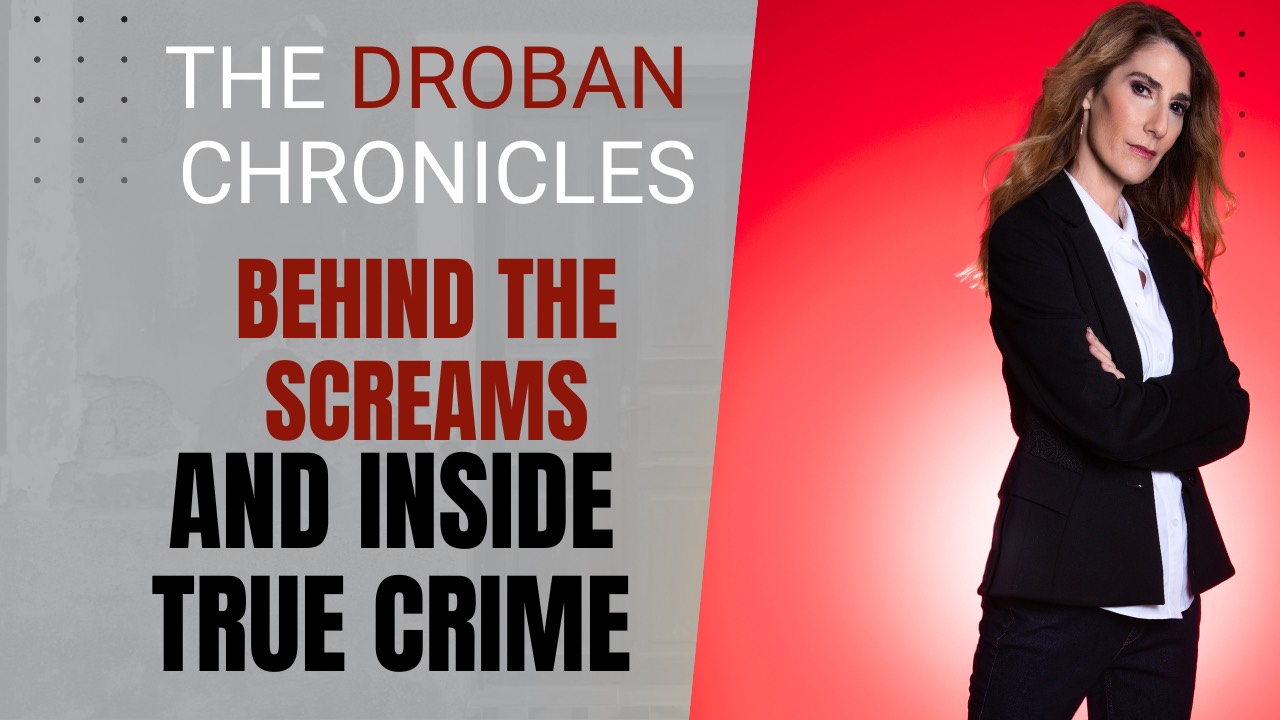
This month, I’m going into the lava—taking you behind the screams and inside true crime writing with a little Q&A.
Q. What’s a moment that changed how you see the world?
Inside a maximum-security jail one Sunday, I visited a client charged with murder. The place was on lockdown. An inmate—strapped to a wheelchair, head covered in a spit hood—looked like Hannibal Lecter.
The steel doors clanged shut behind me. I was alone with my client. To steady myself, I asked about the victim—the one he’d allegedly dismembered and dumped in Roosevelt Lake.
He stared at me and said: “Which one?”
That moment rewired me. His confession would die with me. I’d become the keeper of terrible truths. And I realized I didn’t want to just hold secrets. I wanted to give them meaning—through Crime Stands Still and Surviving a Psychopath—to turn darkness into something that empowers others.
Q. What fear has held you back the most?
Speaking my own truth. I can channel killers, expose predators, even sit across from psychopaths—but telling my own story? That’s terrifying.
Because memoir isn’t about indulgence. It’s about connection. It’s a lifeline. When we tell the truth about our pain, someone else breathes easier. That’s why I push past the fear—because silence costs more.
Q. Is the public version of me the real me?
Yes—and no. The lawyer, author, and consultant you see is polished and battle-tested. But there’s also the side of me who cries at romantic comedies, studies mythology, and finds comfort in I Love Lucy. The truest me lives in both worlds—the strong and the soft—and still believes in the quiet power of truth.
Q. What do I understand deeply that most people don’t?
That people aren’t just good or bad. They’re layered, messy, wounded. I’ve always seen beneath the masks, which made me a stronger lawyer, author, and storyteller. Most people want simple answers. I’ve learned the truth usually lives in the gray.
✨ Next month, I’ll share the one case that still keeps me up at night—and why.


Responses